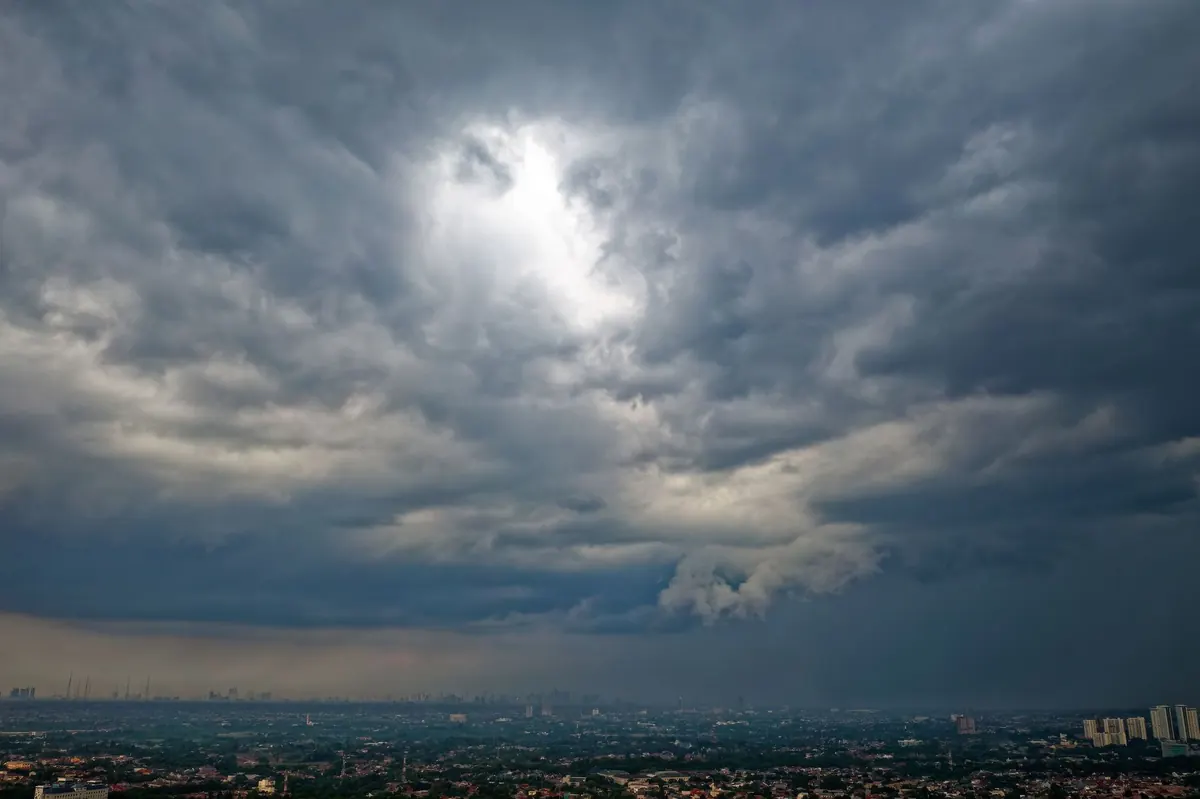
How to Prepare for a Local Emergency: A Seasonal Checklist for Evening Storms
Evening storms rarely announce themselves politely. The sky stays bright through dinner, the air goes still, and then the first gust hits while you are washing up, the children are in bed and the streetlights are already on. That timing is what makes late-summer and early-autumn storms so disruptive: they arrive when your attention is at its lowest, and when every problem has to be solved in the dark.
None of this calls for alarm. It calls for an hour of preparation on an ordinary afternoon, so that an extraordinary evening becomes an inconvenience rather than a crisis. What follows is a seasonal checklist you can work through once now, and revisit in twenty minutes when the forecast turns.
Know What's Coming Before the Sky Turns
Storms are forecast better than they used to be, but the information only helps if it reaches you. Make it a habit, from late spring onward, to check the forecast in the afternoon rather than the morning — the picture for the evening is usually clearer by two or three o'clock, and that is the version you need.
Find out which system your local authority and civil protection service use for weather alerts and sign up for the messages. In many places this is a colour scale running from green through yellow, orange and red, each level describing expected severity rather than certainty. Learn what the levels mean where you live, and treat an orange or red alert as a signal to change your plans: move the car, cancel the errand, bring in the washing, stay off the roads if you can.
Pay attention to the wording as well as the colour. A warning means conditions are favourable and you should keep an eye out; a watch or an alert means something is already happening or imminent. Keep a battery or hand-crank radio somewhere you can find it, and do not rely on a single source — phone notifications fail when networks are overloaded, and sirens only carry so far.
Build a Kit You Can Find in the Dark
The point of an emergency kit is not to survive a month in the wilderness. It is to get you comfortably through eight or ten hours without power, water or a working phone line, without having to search for anything by touch. Put it in one place, tell everyone in the household where that place is, and check it twice a year when you change the clocks.
- Light: two working torches, spare batteries, and a head torch for hands-free work.
- Power: a charged power bank for phones, and the right cables already attached to it.
- Information: a battery or hand-crank radio, plus a written list of key numbers.
- Water and food: bottled water and a few things that need no cooking — crackers, nuts, tinned fish, fruit.
- Health: a small first-aid kit, a week of regular medication if you take any, and a written list of prescriptions and allergies.
- Documents: photocopies of identity papers, insurance details and prescriptions in a waterproof bag.
- Practical extras: some cash in small notes, a whistle, a warm layer each, phone charging cables, and food for pets.
Skip the candles. An open flame in a house with no electricity and possibly a leaking roof is a poor trade for a little light.
Write Down Your Communication Plan
When the power goes out, mobile networks are often congested — everyone in the area is trying to call home at the same moment. Text messages and short messages usually get through when calls do not, so agree on that in advance.
- Choose one person outside your area as the family contact. If local lines are jammed, calls to a distant number often still connect.
- Agree on a check-in time — say, nine o'clock — so nobody panics when a phone is dead.
- Decide where you would meet if you had to leave the house, and name a second place in case the first is unreachable.
- Write the numbers on paper and keep the paper in the kit. Your contacts live in a phone that may run out of battery.
- Walk the children through it once, calmly, in daylight. A plan they have heard before is far less frightening than one they hear for the first time during thunder.
Spend Twenty Minutes on the House
Most storm damage around a home is small and preventable. Before the season, clear leaves and debris from gutters, drains and any outside steps where water collects. Trim branches that hang over the roof or the car. Check that garden furniture, plant pots, bins and anything else loose on a balcony can either come inside or be tied down.
Know how to turn off the gas and the electricity at the mains, and show another adult in the house. Move anything you would hate to lose — photographs, documents, electronics — out of a basement or low cupboard that has flooded before. If you have a car and no garage, park it away from trees and away from the lowest point of the street.
On the afternoon an alert is issued, run through a short version: charge every device, freeze a couple of water bottles to keep the fridge cold, close and latch the shutters, and put a torch by each bed.
Check the People Who Need It
This is the part of the checklist that matters most, and the one easiest to forget. Think of who on your street would struggle tonight: an older neighbour living alone, someone with a disability, a family with a newborn, a person whose medical equipment depends on power.
Knock on the door in the afternoon, not during the storm. Ask what they need rather than assuming, and swap phone numbers if you have not already. Offer something concrete — bringing up a torch, charging a phone at your house, checking in at eight. If someone relies on powered medical equipment or has a condition that worries you, encourage them to speak to their care team about a backup plan well before the season starts; that is a conversation for a professional, not for a neighbour with good intentions.
When the Storm Arrives After Dark
Once the first thunder is close, get inside and stay there. Keep away from windows, and leave the taps alone if you can see lightning — plumbing and landlines conduct. Unplug sensitive electronics before the storm rather than during it. If the power fails, open the fridge as little as possible and let the torch do the work.
If you are caught out in the car, slow down, switch on your lights and pull over somewhere safe rather than under a tree or in an underpass. Never drive through standing water: you cannot judge its depth or whether the road beneath it has gone. And if your street begins to flood, move upwards within the building rather than out into it, and follow instructions from local emergency services.
After the Storm, Before the Next One
When the noise stops, take a walk around the outside of the house in daylight and look for damaged cables, loose tiles and blocked drains. Report downed power lines to the utility and never touch them. Check on your neighbours again, especially anyone who was alone.
Then do the small thing that makes next time easier: restock what you used, replace the batteries, and write down the two or three items you wished you had. Ten minutes now, and the next evening storm will find you ready — lights on, phone charged, and the person next door already accounted for.
Photo: Tom Fisk / Pexels

Fact-Checking Local Rumors: A Step-by-Step Guide for Neighbors
Most neighborhood rumors are half-truths passed through too many hands. A practical guide to checking them...

Museum and Gallery Nights: A First-Timer’s Guide to Late Openings
A practical first-timer's guide to evening museum and gallery openings, from choosing the right kind of...
About Us